

Top Five Fridays: November 7, 2025
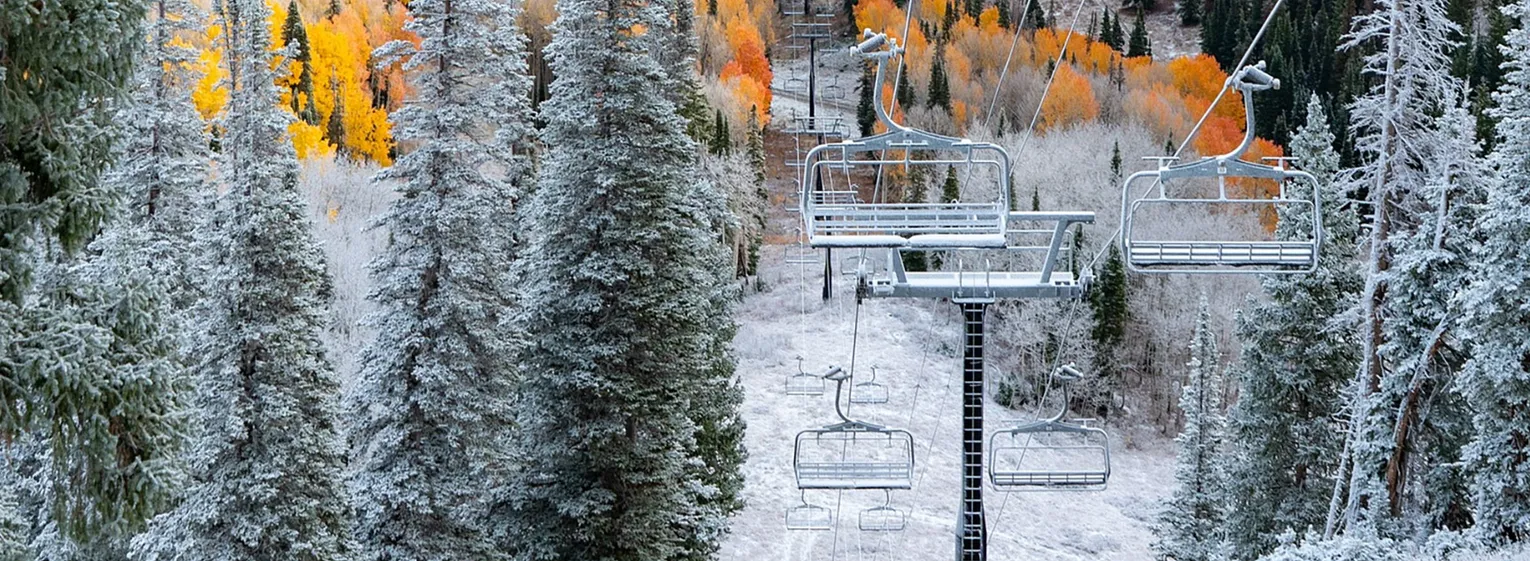
A recent scene at Park City Mountain in Utah - one of several ski areas contributing to one of the state’s most significant economic drivers. More on that in highlight #2! Image: Park City Mountain on Facebook
#1: Armada Skis Introduces Armada Snowboards, Receiving Mixed Reactions:
Hello, and welcome to Top Five Fridays, the November 7, 2025 edition! The week following the first FIS World Cup alpine race of the years is always an interesting one in the world of ski news, as every year that “winter is here!” week seems to be immediately followed by a somewhat more subdued week as a result of the three week stretch before the second race. Still, while this week was a slow one across all FIS sports, and most of the country is still waiting for their local lifts to start spinning, we still have a handful of stories well worth discussing this week. Afterall, as those of you who stick with us throughout the summer months know: somehow, there’s always new news in the world of skiing. Or, in the case of our first highlight this week, snowboarding.
This week, longtime “core” ski brand Armada announced that they’re entering the world of snowboarding. In a well coordinated and well funded marketing blitz this week, the brand announced that they’ll be launching a full lineup of snowboard products, consisting of 9 different models as well as bindings. Across the lineup the brand is releasing 3 men’s boards, 3 women’s boards, and 3 unisex “experiential” boards. For now, that’s just about all we know about the product line itself, but there’s plenty more to discuss from a marketing and business standpoint.
As you might expect, Armada’s announcement that they’re entering the snowboard world was met with heavily mixed reactions. For many snowboarders, the immediate reaction has been rejection. In their eyes, snowboarding doesn’t need more “outside” brands like Armada, Line, K2, and Salomon entering their world. The way they see it, these are just ski brands trying to profit off of snowboard culture. For others though, clearer minds prevailed as they noted that not only is Armada known for making high quality skis, but they’ve also been dedicated almost exclusively to the world of freeskiing since their inception. In other words, this isn’t a perceivably snooty ski brand entering the snowboard market - it’s a brand whose core values are very much inline with that of the snowboard community. Strengthening that argument for Armada, is the fact that they took the time to build a strong roster of riders from within the snowboard community, spanning both up and coming talent as well as veterans in the sport. In total, their roster of sponsored athletes includes: Dan Liedahl (aka Danimals), Stefi Luxton, Alek Oestreng, Ivika Juergenson, Mike Liddle, Justin Phipps, Juliette Pelchat, and Egan Wint.
So far, Armada’s entrance into the snowboarding world has gone as you might expect whenever a ski brand enters a market that defines itself by its rebellious, anti-corporate ways. While there’s been some inevitable pushback, the brand also stands a chance thanks to its sincere approach to creating a full lineup of new models, as well as supporting core members of the snowboarding community. What happens next of course, is anyone’s guess. That’s all we know for now, but if you’re interested in learning more about this development, we suggest heading over to the Armada Snowboards website!
#2: A New Study Provides a Closer Look at the Strong Economic Impact of Utah’s Ski Industry:
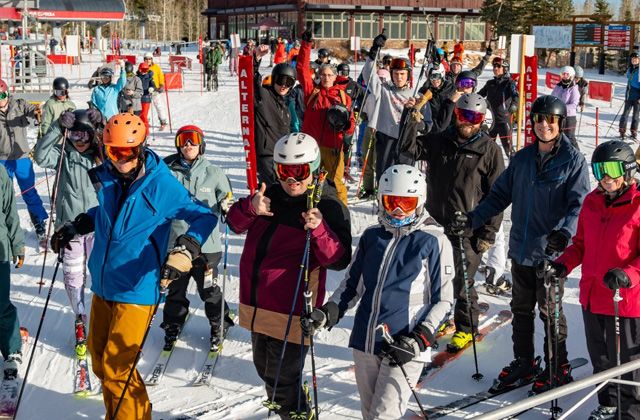
Whether it’s the conditions, the apres, the ease of access, or all of the above - Utah has become one of the top ski destinations in North America, and the state’s economy is benefiting from it. Image: Park City Mountain on Facebook
Next up this week, is an interesting story for all of the economists in the audience who love learning about the wide ranging impact of the ski industry. Here on Top Five Fridays, we’ve talked time and time again about the important role that ski resorts play in local economies, and this week, we have a new study to share that highlights exactly that in great detail.
In a wide ranging study released by the University of Utah’s Kem C. Gardner Policy Institute this week, researchers analyzed a significant amount of data related to the economic impact of last year’s ski season in Utah. Starting with the biggest number in the report, the study found that skiers and snowboarders spent approximately $2.5 billion dollars last season. As a result of that spending, roughly 31,800 jobs were supported, while $342.6 million in tax revenue was generated for state and local governments. For comparison’s sake, it’s worth noting that the state’s GDP in 2024 was $224.6 billion, meaning that the ski industry is responsible for roughly 1% of the state’s economy. Without diving too deeply into the vast world of economic research, we also found a statistic suggesting that the state’s Agriculture economy was valued at about $2.8 billion in 2022. In other words, in Utah, the ski economy is roughly equivalent in value to agriculture. That is to say, it’s incredibly important.
In addition to these high level statistics, the study fromm the Kem C. Gardener Policy Institute also treats us to a handful of details about where the money is being spent, as well as where it’s coming from. For example, it found that the average skier spent about $306 per day at the mountain, across an average trip length of 6.4 nights. Within that daily budget, roughly $62 per day was spent on lodging, $61 on food and dining, and $59 on lift tickets. For those running the numbers at home, this leaves about $124 per day, which was dispersed between retail, rentals, instruction, and other miscellaneous expenses. Additionally, it’s worth noting that only 43% of skiers and snowboarders skiing in Utah call the state home. Outside of that, 32% traveled from other U.S. States, while the remaining 25% visited from international locations. Looked at slightly differently, this tells us that 57% of Utah’s ski business comes from outside of state. While this might not be an exact figure, when combined with the total value of the state’s ski economy last year ($2.5 billion), it suggests that roughly $1.42 billion of the state’s ski economy was new money being introduced to the state from beyond its borders.
All told, while this particular highlight isn’t the type of earth shattering news we love to share on Top Five Fridays, it’s still incredibly interesting for those of us who love to have talking points about why the world of skiing matters so much. It’s not just a fun pastime - for some states, it’s a crucial part of their economy. To learn more about this, we’ll turn you over to TownLift.com, as well as this fact sheet produced by the study.
#3: At Powder Mountain, Reed Hasting’s Plans to Create a Third U.S. Based Private Mountain Community Are Off to an Impressive Start:
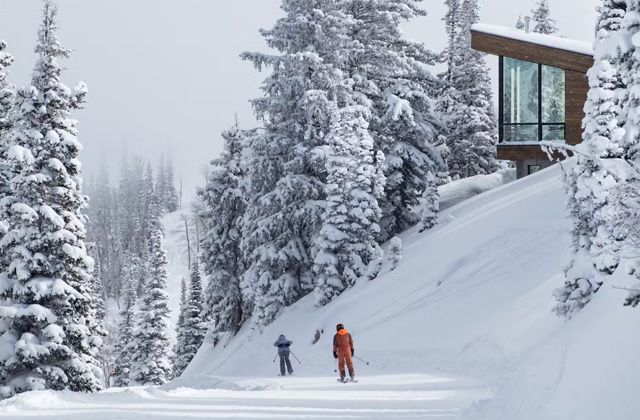
At Powder Mountain, former Netflix CEO Reed Hasting’s efforts to blend an ultra exclusive, luxury ski experience with an existing public mountain seems to be off to an excellent start. Image: PowderHaven.com
Speaking of the impact of skiing on the economy, our next highlight this week strikes a similar tone as we check in on the latest from Powder Mountain - a ski resort that’s making its way into the world of semi-privatization while courting millionaire members.
If you haven’t been following along with the recent history of Powder Mountain, it’s worth quickly catching up on. While the mountain itself has been under what we’d call “tech bro ownership” since 2013, things took an even more severe turn in 2023 when former Netflix CEO Reed Hastings stepped in and purchased a majority stake in the ski area. In the two years since then, Reed has slowly taken steps to semi-privatize the resort, ultimately announcing in the spring of 2024 plans to close approximately 40% of the resort to the public, while installing a new members-only chairlift. While that move was met with the expected backlash, it’s worth wondering, “has the plan worked?”.
This week in a report from SFGate.com, we at least get some insight into that answer as we learn more about how the real estate side of Hasting’s effort has gone. In addition to privatizing a part of the mountain, Hastings is also looking to develop a private mountain community. Taking notes from the Yellowstone Club and Wasatch Peaks Ranch playbooks, Hastings is planning to sell private home lots in communities at the base of the resort. Earlier this year, Hastings made the first 39 lots in his initial development available. Those 39 lots, priced at $2.8 million each, also require owners to pay an initiation fee as well as an annual $25,000 membership fee. In other words, those interested in joining Powder Mountain’s private community will have to be a part of the wealthiest tax brackets. And as for how it’s going? Well, those 39 lots sold out within 5 months. In regards to interest in this project, things seem to be going very well for Hastings.
All of this, of course, is backdropped by a roughly $76 million lawsuit that’s still in litigation. To make a long story short, the previous owners of the resort had taken on a significant amount of EB-5 investment which they reportedly stopped repaying. Now, those investors are suing for the money and it’s a debt that Hastings may end up having to repay himself. Still, with a net worth of roughly $5.8 billion, and $109.2 million in funds from lot sales, it seems as though Hastings will be able to weather the storm just fine. With that in mind, it feels all but certain to say that Powder Mountain is all but guaranteed to become the U.S.’s third, at least partially, private ski area for the megarich. To learn more about this, check out the report from SFGate.com.
#4: In an Antithesis to Powder Mountain, New Hampshire’s Ragged Mountain Has Just Been Sold Back to Local Investors:
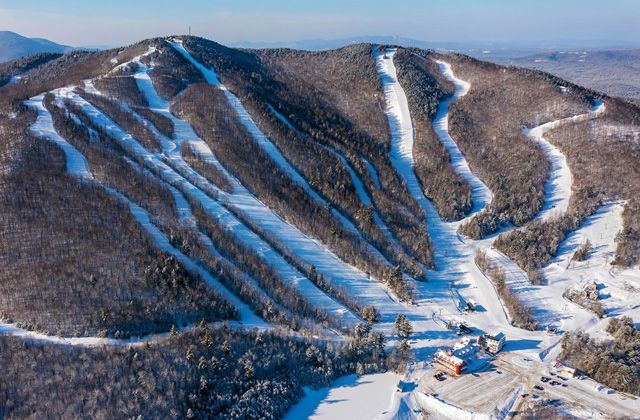
A look at Ragged Mountain, the most recent New Hampshire ski area to be sold to local investors. Image: Ragged Mountain on Facebook
Finally, we’re intentionally rounding things out this week with a story that balances out the last one. While a vast majority of us might bemoan the loss of access to a great ski resort in Powder Mountain to the ultrarich, it should be noted that there’s also been a rise in local acquisitions of ski hills. Case in point: this week’s news regarding Ragged Mountain, New Hampshire.
Located in Danbury, NH, Ragged Mountain is a community ski area that’s had a bit of a tumultuous history. Originally opened in 1965, Ragged Mountain operated for 9 years before declaring bankruptcy and being sold to the state. From there, it was sold back to private investors who were also able to operate it for about a decade before having to shut it down. A few years later, in 1988, the resort was once again revived and successfully operated for a number of years. Finally, in 2007, those owners sold the resort to Pacific Group Resorts, who’ve owned and operated a handful of ski resorts and golf courses over the years. Most notably, PGR is the company that purchased Jay Peak out of federal receivership back in 2022. Since then, PGR has owned and operated a total of six ski areas, including Jay Peak, Ragged Mountain, Wisp Resort, Mountain Washington Alpine Resort (British Columbia), Wintergreen Resort, and Powderhorn Mountain Resort. That is, until this week.
Just yesterday, news broke that PGR has sold Ragged Mountain to a group of local investors. Operating under the name SF Mountain Co, LLC (SFMC), six local investors and lifelong Ragged Mountain skiers have joined forces to purchase the ski area. While not many details are known regarding the reason for the sale or the final price, a report from Concord Monitor indicates that, “previous Ragged owners struggled with the cost of lifts, snowmaking and labor.” Given the resort’s history alongside that statement, you might jump to feelings of concern for the new owners as well as the future of the mountain. But, there are some upsides to Ragged that make it an attractive purchase.
First on that list is the fact that an adjacent peak, Pinnacle, once had trails cut by a former owner. While no lift was ever installed and the trails were never opened, a real estate listing for the property mentions potential for up to 604 of additional acreage for expansion. Additionally, there was once a golf course at the ski area, which, while currently out of service, could conceivably be rehabilitated and put back into use. Finally, the last upside worth mentioning here is that the ski area also has a small amount of real estate available for development at the base area, which, if Reed Hastings has taught us anything, it’s that real estate at the base of a ski resort can be highly valuable.
As for what happens next, the good news for locals is that it sounds like there won’t be much noticeable change in the immediate future. With the change in ownership, the new group has elected to keep General Manager Erik Barnes in the same position, while existing reciprocal season pass agreements with Jay Peak, Wisp, Mt. Washington Alpine Resort, Wintergreen, and Powderhorn will all remain in place at least through this season. All in all, this feels like a win for the local community, and we wish the new owners of Ragged Mountain the best of luck!